Space

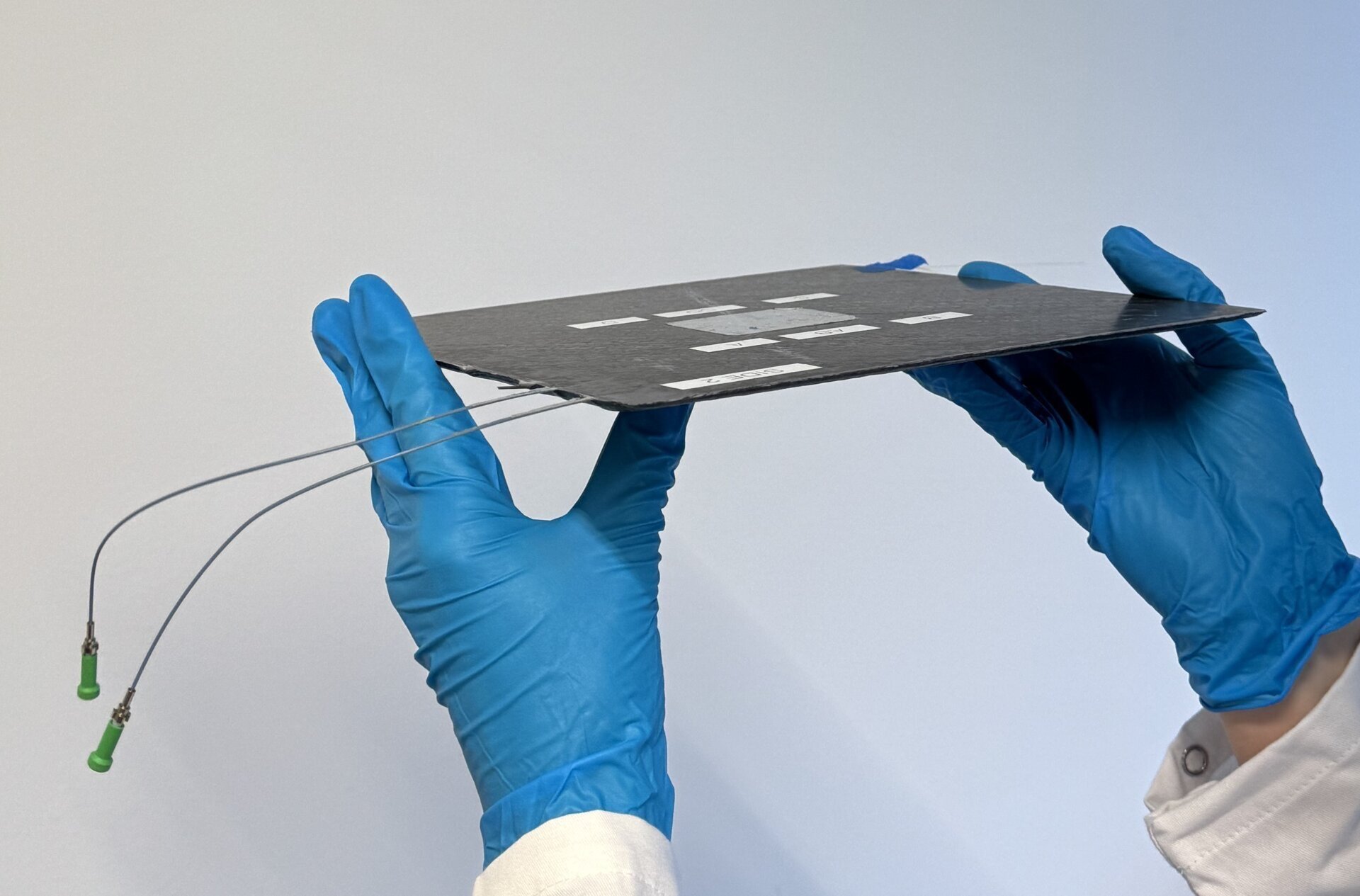
Scotland creates fabric that changes color due to radiation

Scotland creates fabric that changes color due to radiation Scientists and clothing designers collaborate to create fabric with bacteria-based dyes. The innovative material features multiple layers of different colors. As the top layer fades from radiation, the underlying layer becomes visible. This technology has versatile applications, from testing space suits and equipment coverings to everyday wear that alerts wearers of harmful sunlight exposure.


The US Academy of Sciences Reveals Objectives for First Manned Missions to Mars

The US Academy of Sciences Reveals Objectives for First Manned Missions to Mars The scientific program for the first manned missions to Mars has established 11 key goals. These include investigating water and carbon dioxide cycles, studying Mars' geology, and assessing radiation levels. The primary objective will be to search for evidence of past or current life. NASA is preparing to dispatch astronauts to Mars in the mid-2030s.


Russia Developing Nuclear Clocks for Accurate Time Measurement

Russia Developing Nuclear Clocks for Accurate Time Measurement Russia is in the process of developing nuclear clocks capable of measuring time near black holes. These advanced clocks, as described by Alexander Sergeyev from the Russian Academy of Sciences, will enable precise positioning in a gravitational field, even when satellites or spacecraft are distant from Earth. The functionality of these clocks is grounded in the theory of general relativity, where time moves slower in higher gravity. This innovative technology is set to revolutionize time measurement in extreme gravitational conditions.


Planets Have Various Shapes

Planets Have Various Shapes Almost all planets in our Solar System are not perfect spheres; they are "flattened" at the poles due to their rotation speed. Venus and Mercury are the closest to being perfect spheres, while Jupiter is the most flattened with its wider equator compared to its polar diameter by 9276 km, given its fast rotation of just under 10 hours. However, the dwarf planet Haumea showcases extreme deviations from a spherical shape. With an axial rotation period of only 4 hours, centrifugal forces have significantly stretched it in various directions, making its shape highly irregular compared to the more rounded planets in our Solar System.


Phobos Captured by "Mars Express" Spacecraft

Phobos Captured by "Mars Express" Spacecraft The moon Phobos was captured against the backdrop of Mars by the "Mars Express" spacecraft. This stunning image showcases the small, irregularly shaped moon as it orbits around the red planet, providing a unique perspective of the Martian system.


Galactic Winds Shape Spiral Galaxy NGC 1068

Galactic Winds Shape Spiral Galaxy NGC 1068 A composite image showcases data from various telescopes: visible light data from the Hubble Telescope, infrared data from the James Webb Telescope, X-ray data from the Chandra Telescope, and radio waves data from the VLA telescope. Each telescope's data is represented in different colors, creating a vibrant and informative blend. The focal point of the galaxy reveals formidable winds emerging from its core, where a supermassive black hole remains hidden. This observation sheds light on the dynamic processes occurring within NGC 1068, offering valuable insights into the galaxy's evolution.


BBC to Produce Dark Drama About Underwater Civilization

BBC to Produce Dark Drama About Underwater Civilization On December 7, 2025, a new environmental thriller will be released, delving into the conflict between humanity and the underwater species Homo Aqua. The series follows Agent Barkley, assigned to negotiate with the descendants of ancient marine reptiles, while facing off against Solt, a diplomat from the underwater world intent on averting a large-scale war. Notably, the popular Time Lord from the "Doctor Who" universe will not feature in this spin-off.


Rare Dust Anti-Tail Spotted on Interstellar Comet 3I/ATLAS

Rare Dust Anti-Tail Spotted on Interstellar Comet 3I/ATLAS Astronomers are obtaining clearer images of the interstellar comet 3I/ATLAS as it travels further from the Sun. These recent photographs reveal a rare optical phenomenon known as an anti-tail, which points in the opposite direction to the comet's usual tail. The appearance of an anti-tail is commonly associated with Earth passing through a comet's orbital plane for a brief period. Surprisingly, this explanation does not align with the unique case of comet 3I/ATLAS, adding to the mystery surrounding this celestial object.


nasa plans to establish moon base by 2030

nasa plans to establish moon base by 2030 By 2030, NASA aims to create a Moon base under the Artemis program. This initiative will enable astronauts to reside on the Moon, conducting scientific research actively. The base, set to be located in the Shackleton Crater, will comprise a primary residential module, a mobile living platform, and a lunar rover.


Jeff Bezos Unveils Blue Moon MK1 Lunar Lander by Blue Origin

Jeff Bezos Unveils Blue Moon MK1 Lunar Lander by Blue Origin An automatic interplanetary station is set to travel to the Moon's South Pole in early 2026, targeting a landing site with potential water ice deposits, making it of great scientific interest. The Blue Moon MK1, towering over 8 meters, has the capacity to transport up to 3 tons of payload to the lunar surface. This significant development marks a crucial step in advancing space exploration capabilities.